Public and occupational safety organizations invest in hazard information, training, warnings, and other forms of support. Do those efforts work? For whom, and under what conditions? Contexture Risk Reduction offers a systematic way to examine those questions.
Behind the name
Contexture means an interwoven whole, and natural hazard risk works the same way: relationships among people, hazards, and services shape how risk emerges. We study those connections to help organizations identify where they can make a difference, design support that fits the context, and evaluate how it works in practice.
Social science belongs in that work from the start. We use it to shape the questions, engage affected populations, examine how services are used, and build ways to monitor results over time. Evaluation is standard practice in public health and education; we bring that same rigor to natural hazards and public safety.
Who we work with
Public safety and emergency management agencies, forecasting and warning services, training providers, and organizations operating in hazardous environments. Our roots are in avalanche safety, and we work across natural hazards.
Why Contexture
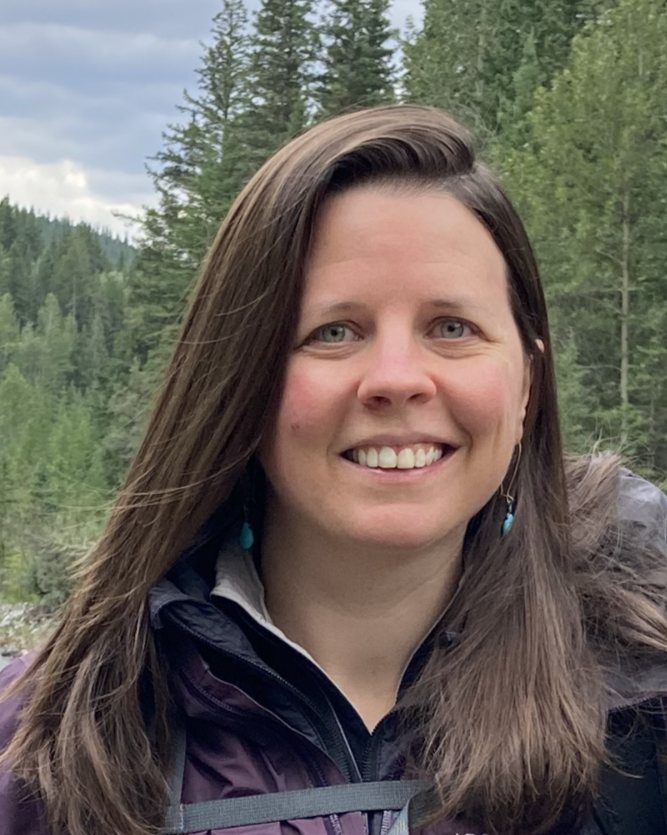
Anne St. Clair
Principal consultant
Anne's work traces back 15 years to an avalanche safety course where she learned a checklist for assessing unstable snow. She found herself asking, "How do they know this works for people?" That question followed her into the field and now guides her research on the human dimensions of natural hazard risk reduction, particularly in avalanche safety.
She has spent more than a decade working in avalanche forecasting, guiding, education, and professional training. Her work brings that experience together with social science expertise to understand how people make decisions, center the perspectives of affected populations and practitioners, and examine whether risk reduction services work as intended.
Through her PhD research, Anne developed a framework for systematically designing and evaluating avalanche risk reduction services. Her applied projects include a study with Avalanche Canada of how people use public avalanche forecasts and an evaluation of AIARE's Professional Level 1 training program. As a Disaster Risk Analyst with BC's Ministry of Emergency Management and Climate Readiness, she supports risk reduction across natural hazards, including the development of risk assessment guidance materials and the design of a hazard exposure data visualization tool.
Anne is the Research Advisor for the American Institute for Avalanche Research and Education (AIARE) and an instructor of its professional training courses. She leads Contexture's work and brings in collaborators when a project calls for additional expertise.
Qualifications
PhD student, School of Resource and Environmental Management, Simon Fraser University
Master of Resource Management, Simon Fraser University
Avalanche Practitioner member and Avalanche Operations Level 2, Canadian Avalanche Association
Professional member, American Avalanche Association
Recognition
Stellar Award, International Snow Science Workshop, 2023
Dean of Graduate Studies Convocation Award, Simon Fraser University, 2020
Publications
NEW for ISSW 2026
St. Clair, A., Walker, E., & Zimmerman-Wall, S. (2026). Understanding and improving a professional avalanche training program: Initial findings from the AIARE Pro 1. Proceedings of the 2026 International Snow Science Workshop, Whistler, BC, Canada.
[Download PDF]
St. Clair, A., Haegeli, P., & McNeil, K. (2026). A systematic framework for designing and evaluating avalanche risk reduction interventions. Proceedings of the 2026 International Snow Science Workshop, Whistler, BC, Canada.
[Download PDF]
Featured work
St. Clair, A., Finn, H., & Haegeli, P. (2021). Where the rubber of the RISP model meets the road: Contextualizing risk information seeking and processing with an avalanche bulletin user typology. International Journal of Disaster Risk Reduction, 66. https://doi.org/10.1016/j.ijdrr.2021.102626
St. Clair, A., & Haegeli, P. (2023). Toward improved effectiveness of public avalanche safety services: A framework for asking constructive questions. Proceedings of the 2023 International Snow Science Workshop, Bend, OR, USA. October 8-13, 2023.
http://arc.lib.montana.edu/snow-science/item/2992
Haegeli, P., St. Clair, A., McNeil, K., Mannberg, A., & Hetland, A. (2023). Reflections on how to improve the contribution of social science research to avalanche safety practices, Proceedings of the 2023 International Snow Science Workshop, Bend, OR, USA. October 8-13, 2023. http://arc.lib.montana.edu/snow-science/item/2856
Hetland, A., Hetland, R., Mannberg, A., Skille, T., Haegeli, P., St. Clair, A., & McNeil, K. (2023). A systematic overview of peer-reviewed research on the human factors in avalanche decision-making, Proceedings of the 2023 International Snow Science Workshop, Bend, OR, USA. http://arc.lib.montana.edu/snow-science/item/2857
St. Clair, A. Finn, H., Haegeli, P., Klassen, K., & Gregory, R. (2020). Getting to know the recreational audience can improve the effectiveness of the avalanche bulletin. Published in The Avalanche Journal. Canadian Avalanche Association, Revelstoke, BC, Canada, and The Avalanche Review. American Avalanche Association, Bozeman, MT, USA.
https://theavalanchereview.org/wp-content/uploads/2021/11/TAR3804_Low.pdf